
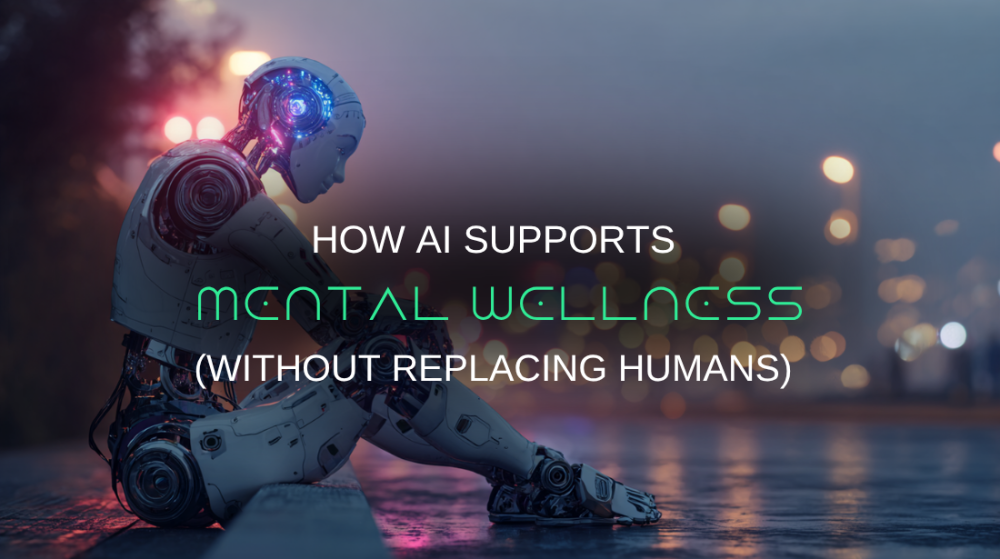
How AI Supports Mental Wellness (Without Replacing Humans)
Disclaimer: AI is not a replacement for human therapists or mental health professionals. It can support emotional wellbeing in certain ways, such as guided journaling, mood tracking, healthy habit formation, and providing general mental wellness tools but it cannot diagnose, treat, or substitute for professional care. Individuals facing mental health challenges should always seek qualified help from licensed professionals.
Mental health has become one of the most important conversations of modern life. With stress, anxiety, and burnout rising across all age groups, accessible support is more necessary than ever. AI has entered this space not to replace therapists, but to complement them helping people track emotions, understand thought patterns, build positive routines, and find reliable information that supports everyday wellbeing.
The goal of AI in this field is simple: support, not replacement. It offers guidance, consistency, and self-reflection opportunities, while the deep human understanding of therapy remains irreplaceable. With nearly 970 million people, about one in eight globally living with a mental disorder, AI’s supportive role becomes even more valuable in extending accessible mental wellness tools to those who may not yet receive professional care
1. Guided Journaling and Emotional Tracking
One of the most effective ways AI contributes to mental wellness is through guided journaling. Writing down thoughts helps process emotions, recognize triggers, and track progress. Many people, however, struggle to maintain this habit. AI-assisted journaling tools provide structure, prompts, and reminders that make it easier to reflect consistently.
AI can analyze journal entries to detect recurring emotional themes such as stress linked to work or social isolation and gently highlight them to the user. This allows individuals to notice patterns they might otherwise overlook. For example, an app might detect that negative emotions peak on certain weekdays, suggesting possible work-related stress.
While AI can identify patterns, it does not assign clinical labels or diagnose mental health conditions. Instead, it promotes self-awareness. The ability to track moods over time gives people a visual sense of improvement or decline, helping them decide when to reach out for professional support.
AI journaling assistants can also encourage gratitude practices, self-compassion, and mindfulness through daily prompts like:
- "What made you feel calm today?”
- "What’s something small that went well this week?”
2. Building Healthy Habits
Mental wellness relies heavily on daily habits, sleep, nutrition, physical activity, and social connection. Yet forming and maintaining these habits is challenging. AI systems excel at recognizing behavior patterns and offering consistent feedback, which makes them well-suited for habit formation.
For example, AI-based wellness apps can analyze sleep data and suggest adjustments to bedtime routines. They can remind users to take regular breaks from work, drink water, or step outdoors for sunlight exposure. Over time, these micro-habits compound into measurable improvements in emotional balance.
Unlike motivational quotes or generic reminders, AI tools can personalize recommendations. A user who struggles with sleep might receive gentle nudges about screen time or caffeine intake. Another who reports high anxiety might be guided toward breathing exercises or short mindfulness sessions.
This adaptability makes AI a reliable wellness companion. It does not offer therapy or deep emotional exploration, but it helps create the conditions for better mental health—regular rest, physical care, and small acts of self-discipline.
3. Supporting Cognitive Behavioral Techniques
Cognitive Behavioral Therapy (CBT) is one of the most widely used and effective approaches in mental health treatment. It focuses on identifying and challenging unhelpful thought patterns. While AI cannot conduct CBT sessions, it can support the process by helping users practice the techniques on their own.
AI-powered chat tools can prompt reflection when users report distress. For instance, if someone types, "I feel like I can’t do anything right,” an AI assistant might respond with a gentle question: "What evidence do you have that supports or challenges that thought?”
This type of questioning helps individuals pause and reframe negative self-talk. It mirrors some of the structure of CBT exercises but without crossing into therapy territory.
For users already working with therapists, AI can serve as a between-session support system. It can remind them of coping strategies discussed during therapy or suggest journaling exercises that align with their goals. This continuity helps reinforce progress outside the clinical setting.
4. Mental Health Education and Resource Navigation
Access to reliable information is a major barrier to mental wellness. The internet is full of advice, some accurate, much of it not. AI can help filter and summarize credible mental health information based on scientific sources, making it easier for users to learn about conditions, symptoms, and support options.
An AI assistant can explain what anxiety feels like, what types of therapy exist, or how to find crisis support. It can also direct users to verified hotlines and online resources. In this role, AI acts as a navigator, not a counselor. It empowers people to make informed decisions rather than replacing professional judgment.
For example, a student feeling overwhelmed might ask, "What can I do if I feel constantly stressed?” The AI could respond with general stress-reduction techniques—like breathing exercises, time management tips, or grounding methods—and include links to professional resources.
This kind of educational support can be especially valuable in regions where access to mental health professionals is limited.
5. Encouraging Mindfulness and Relaxation
Mindfulness and relaxation practices are powerful tools for managing anxiety, depression, and everyday stress. AI can guide these practices in an accessible, consistent way. Through voice assistants or mobile apps, users can participate in short, guided meditations, breathing exercises, or body scans designed to calm the nervous system.
What makes AI useful here is its adaptability. A user experiencing racing thoughts before bed might receive a 5-minute sleep meditation. Someone feeling tense before a presentation might be guided through deep-breathing exercises tailored to quick relaxation.
AI-driven mindfulness tools can also adjust difficulty over time, introducing longer sessions or different techniques based on user comfort. While they cannot replicate the interpersonal connection of a mindfulness coach, they help maintain regular practice—a key factor in mental wellness.
6. Reducing Barriers to Support
Many people hesitate to seek mental health support due to stigma, cost, or fear of judgment. AI offers a low-pressure way to begin exploring emotional wellbeing. Talking to a digital assistant or journaling privately can feel safer than sharing personal struggles with another person at least at first.
This initial step can encourage users to open up about emotions they might otherwise suppress. Once they feel more comfortable, they may be more willing to reach out to human professionals for deeper support.
For example, an individual who starts using an AI mood tracker may eventually realize that their negative moods are consistent and severe. Seeing this pattern may motivate them to contact a therapist.
AI tools can therefore serve as entry points, not destinations in the mental wellness journey. They help reduce shame and make the process of reflection approachable.
7. Continuous, Nonjudgmental Availability
One of AI’s greatest strengths in supporting mental wellness is its availability. Human professionals can only offer limited hours, but AI tools operate continuously. This constant accessibility is especially beneficial for individuals who experience emotional distress outside regular therapy hours.
Being able to express thoughts at any time, day or night, can prevent emotional buildup. When someone feels anxious at midnight, an AI journaling app can help them articulate their feelings, track triggers, and practice breathing exercises instead of bottling emotions.
The key advantage is the sense of safety and privacy. Users can express feelings freely without fear of judgment. This can help them process minor stressors before they escalate. However, if the distress is serious, AI tools should always redirect users to professional or emergency help lines. Responsible AI platforms integrate these safety mechanisms clearly and consistently.
8. Personalized Self-Care Suggestions
Each person experiences stress differently, and AI systems can learn these patterns over time. By analyzing input data like mood ratings, sleep logs, or daily reflections, AI can generate personalized self-care suggestions.
For Example:
- If a user reports low motivation, AI might suggest short physical activities or uplifting music.
- If a user feels lonely, it might encourage connecting with a friend or spending time outdoors.
- If sleep data indicates restlessness, it can propose small bedtime adjustments.
9. Supporting Workplace Mental Wellness
Work-related stress is a major contributor to mental health challenges. Many organizations now use AI tools to promote employee wellbeing through anonymous surveys, digital check-ins, and wellness platforms.
AI can detect early signs of burnout trends across teams by analyzing aggregated, anonymized data. This allows companies to address issues such as overwork or low morale before they escalate. On an individual level, AI-driven wellness platforms can provide tailored micro-break reminders, focus timers, and stress-reduction exercises during the workday.
For employees who may be hesitant to speak with managers or HR about stress, these tools offer a safe first outlet. However, the human element remains vital. AI can help identify and track wellbeing indicators, but real change requires empathetic leadership, open communication, and mental health resources within the workplace.
10. Support for Youth and Students
Younger generations often face academic pressure, social media stress, and uncertainty about the future. Many are comfortable interacting with digital tools, making AI a natural fit for providing early mental wellness support.
AI-based chat companions for students can help them practice emotional reflection, manage time effectively, and develop healthier coping mechanisms. For example, an AI platform might help a student create a balanced study schedule, remind them to rest, or suggest stress-relief activities before exams.
These tools also promote emotional literacy by helping young people name and understand their feelings. Over time, this builds self-awareness and resilience. However, schools and parents must ensure such tools include clear boundaries, privacy safeguards, and referrals to professional help when needed.
11. Crisis Response and Early Warning
While AI cannot handle emergencies on its own, it can assist in early detection of distress signals. Some AI systems, with proper privacy controls, can recognize language or behavior patterns that suggest emotional crisis.
For example, if a user frequently writes about hopelessness or isolation, an AI wellness assistant might display a gentle prompt like, "It seems you might be going through a difficult time. You are not alone—help is available,” followed by helpline numbers or crisis resources.
These proactive safety features can be lifesaving when implemented responsibly. The AI does not diagnose or intervene but ensures users are aware of immediate professional support options.
Transparency is key, users should always know when and how such features operate. Responsible design includes strong data protection, anonymization, and user control over what is shared.
12. Addressing Limitations and Ethical Boundaries
AI’s potential in mental wellness comes with significant limitations. It lacks empathy, intuition, and lived human experience. A machine cannot understand the depth of grief, trauma, or emotional nuance that a human therapist perceives instinctively.
AI responses are generated based on patterns, not emotions. While they can provide structured guidance, they cannot build therapeutic relationships or deliver genuine empathy. Relying solely on AI for mental health care risks oversimplifying complex emotional needs.
Ethical design requires that AI tools always include clear disclaimers, data privacy protections, and referral mechanisms to human professionals. They should support, not interfere with professional therapy.
The future of mental wellness technology depends on maintaining this balance between innovation and responsibility.
13. The Human Element: Connection and Care
At the heart of all mental wellness is connection. No algorithm can replace the trust and empathy that develop between people. Human therapists listen, interpret, and respond to emotions in ways that AI cannot replicate.
What AI can do is create space for humans to connect more meaningfully. By automating routine tasks like journaling prompts or daily check-ins, AI frees people to focus on genuine communication. Therapists can use AI summaries to review a client’s week more efficiently, allowing more time for deep discussion during sessions.
For individuals managing stress alone, AI tools can offer structure between therapy appointments. But progress ultimately happens through human insight—understanding, compassion, and shared experience.
14. Integrating AI Responsibly into Everyday Life
Using AI for mental wellness requires intentionality. The best approach is to view it as part of a larger mental health toolkit alongside exercise, social support, mindfulness, and, when needed, professional therapy.
Here are practical ways people can integrate AI responsibly:
- Use it for reflection: Let AI journaling tools help you track moods and recognize triggers.
- Use it for structure: Employ habit-building features to stay consistent with self-care routines.
- Use it for learning: Access reliable educational content about mental health topics.
- Use it for early insight: Notice when patterns suggest you might need additional support.
- Use it for balance: Combine AI tools with offline activities that nurture real-world connection.
Looking Ahead
As AI systems continue to advance, their role in mental wellness will likely expand through smarter personalization, multimodal inputs (voice, text, biometric data), and closer integration with clinical practices. Yet the ethical principle will remain unchanged: human judgment must always guide care.
The most effective future involves collaboration between technology and professionals. Therapists may use AI insights to enhance understanding, while users benefit from accessible daily support. The goal is not automation of empathy but amplification of care.